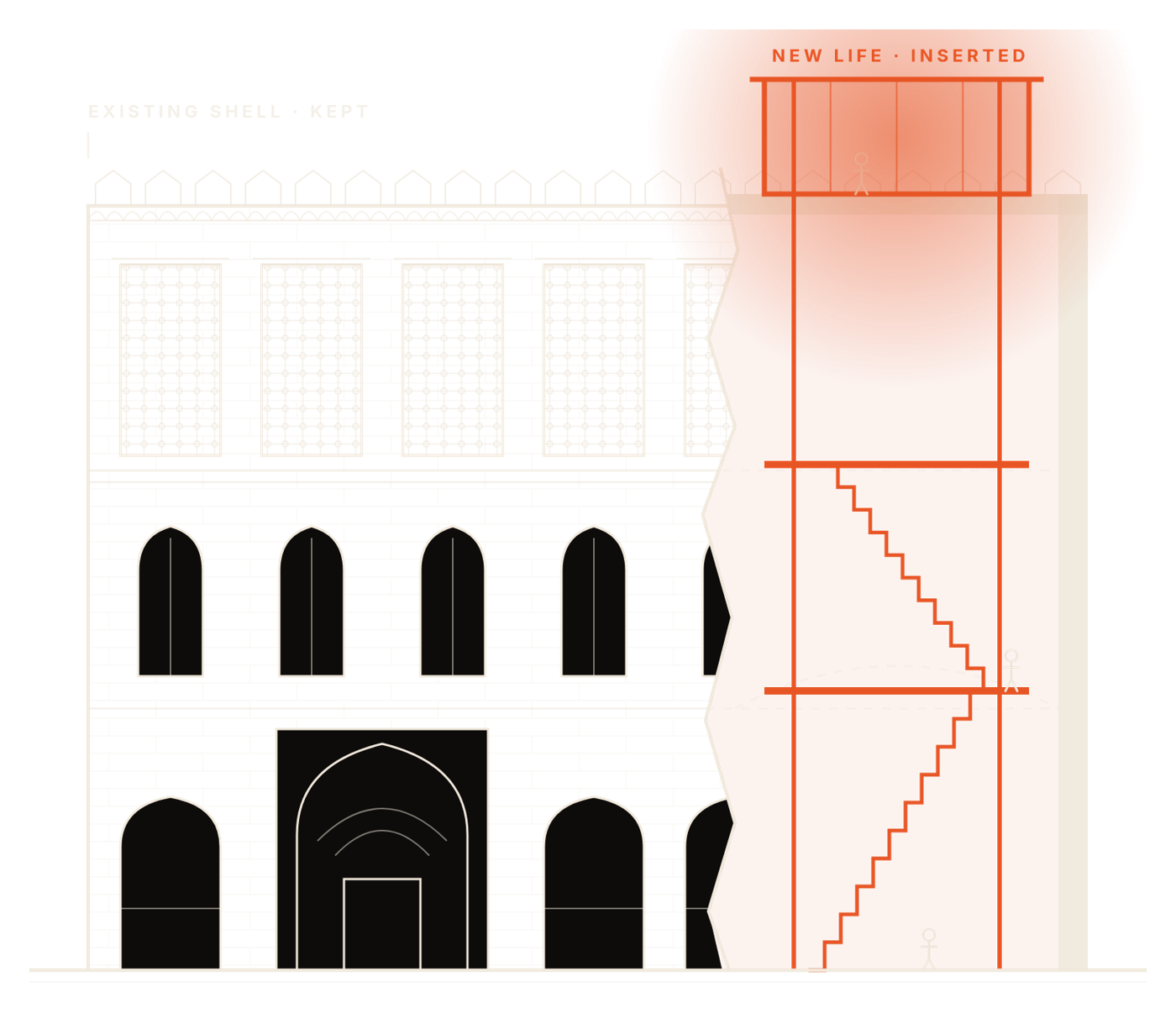
Line elevation of a historic facade. The existing shell is kept, and a new structure is inserted inside it in orange.

An open, international ideas competition for architecture students and young architects. Choose a historic building in Egypt, design a contemporary layer that brings people back to it, and prove that the new layer can be taken away without a trace.

01

What is announced

Who can enterStudents and young architects, 26 or younger
The siteAny historic building in Egypt — you choose
SubmissionOne A0 board, uploaded on this site
Registration · Fees · Dates · Jury · PrizesAnnounced at launch
Registration, fees, dates, jury and prizes are announced at launch. There is no registration and no payment before then.
02

The challenge

Design a contemporary intervention inside, on or around an existing heritage building in Egypt. It must host a cultural hub or a contemporary exhibition venue. The new layer stands on its own structure, touches the old one lightly, and can be removed. The old fabric stays as it is.

What is the smallest, lightest and most precise move that gives this monument a public future, and how do you show it can be taken away?
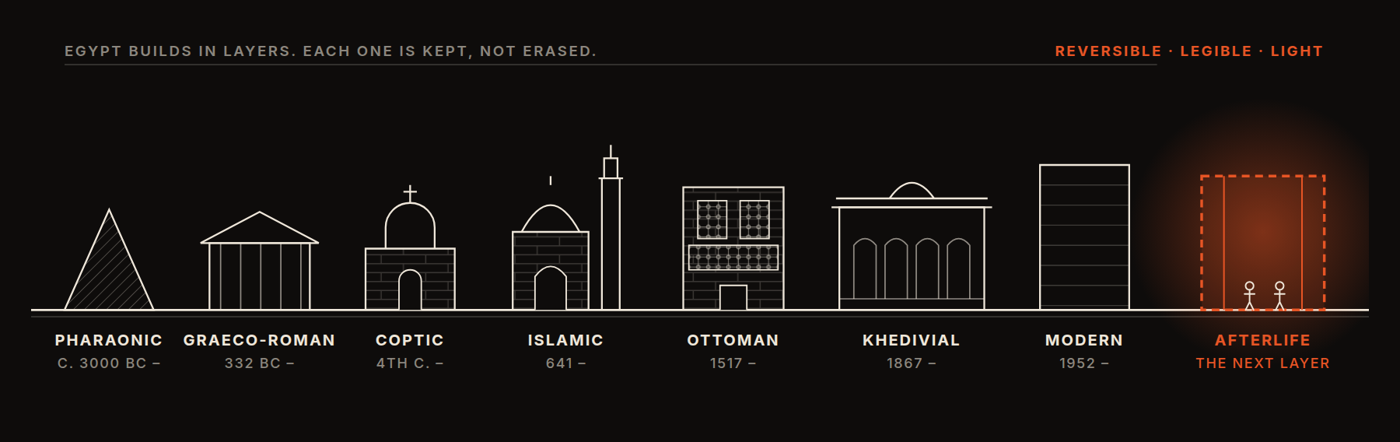
Egypt's building layers drawn as a skyline, from Pharaonic to modern, with Afterlife drawn in orange as the next layer.
03

You choose the building

There is no assigned site. Any building or site in Egypt is eligible if it meets one of three conditions. It can be standing, partly ruined or a ruin, from any period and of any type.
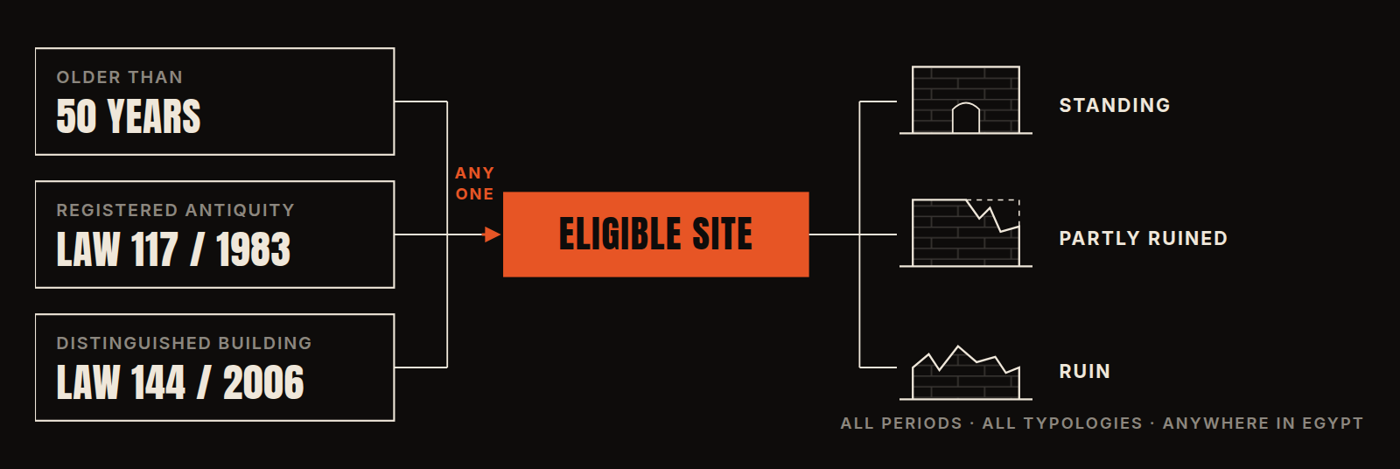
More than 50 years old
Law No. 117 of 1983Registered as an antiquity
Law No. 144 of 2006Registered as a building of distinguished architectural value
Diagram: three conditions lead to an eligible site, which may be standing, partly ruined or a ruin.
An ideas competitionNothing will be built, and no site visit is required. Do not enter closed or restricted sites, and do not survey or take samples from any monument. Work from public sources. MASAR Competitions is not affiliated with any authority or site owner, and taking part grants no permit or access.
04

Ways to intervene

Six ways a new layer can meet an old building. Combine them, or invent your own.
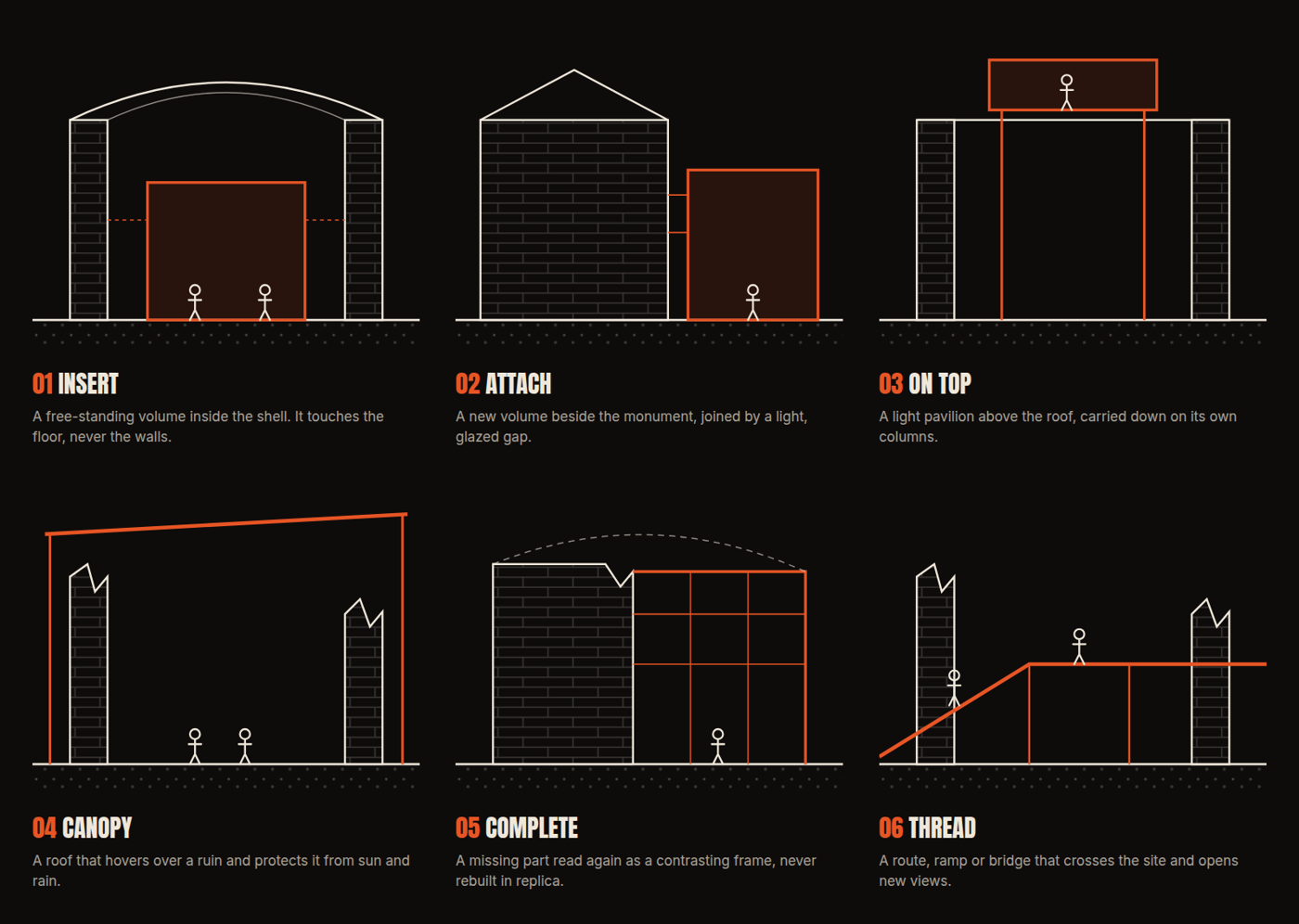
1 · InsertA free-standing volume inside the shell. It touches the floor, never the walls.
2 · AttachA new volume beside the monument, joined by a light, glazed gap.
3 · On topA light pavilion above the roof, carried down on its own columns.
4 · CanopyA roof that hovers over a ruin and protects it from sun and rain.
5 · CompleteA missing part read again as a contrasting frame, never rebuilt as a replica.
6 · ThreadA route, ramp or bridge that crosses the site and opens new views.
Six section drawings showing insert, attach, on top, canopy, complete and thread, with the new layer in orange.
05

Three rules at every joint

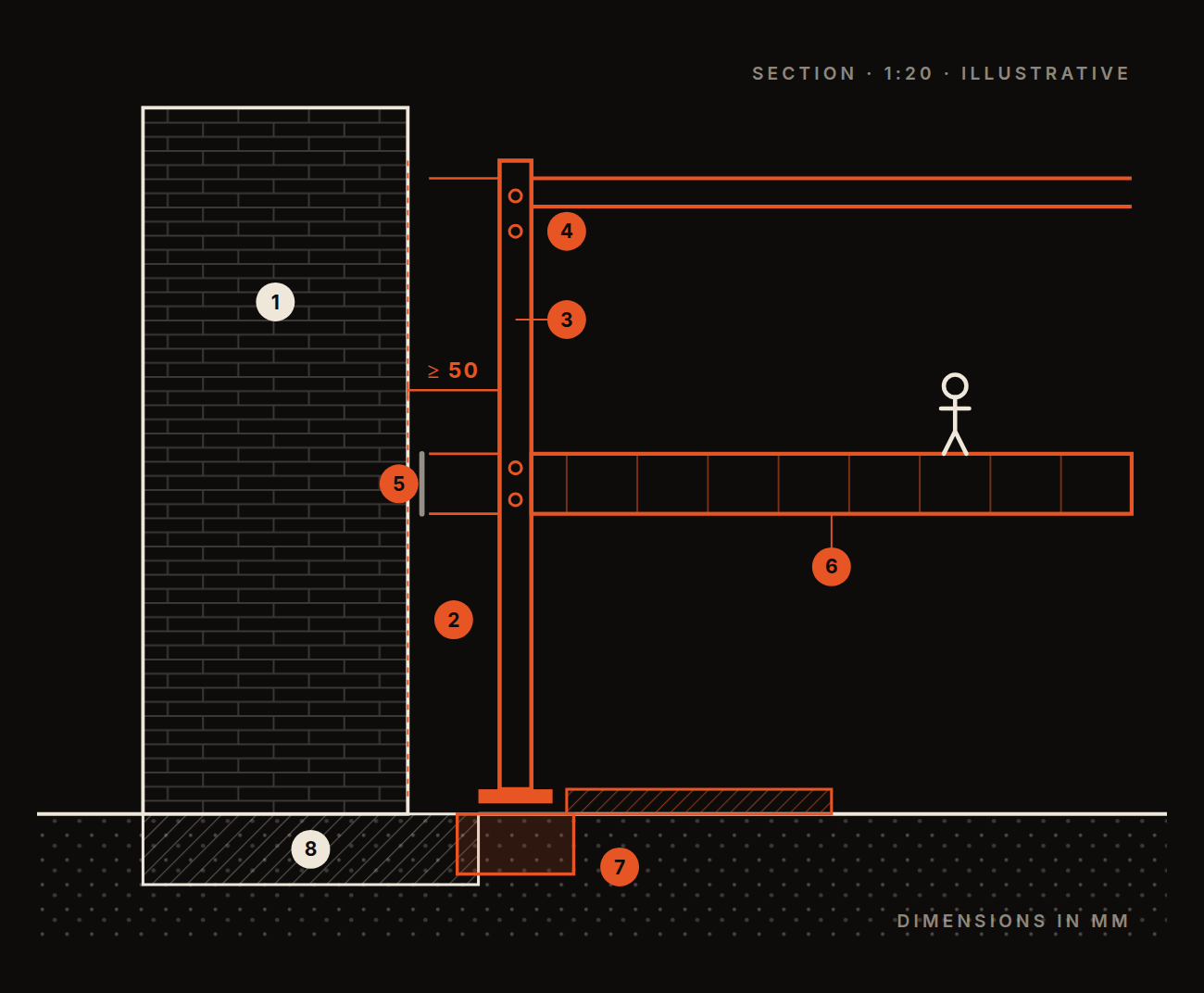
Touch lightly.No fixings into historic fabric.
Carry your own load.Down to your own foundation.
Show the joint.A visible gap, never a hidden bond.
Section at 1:20. A steel frame stands at least 50 mm clear of a historic masonry wall, on its own shallow foundation.
06

Read the building first

Historic buildings in Egypt already hold centuries of climate knowledge: the wind-catcher, the lantern over the hall, the mashrabiya, the courtyard that cools at night. Read how your building works before you add to it, and let the new layer keep it working.
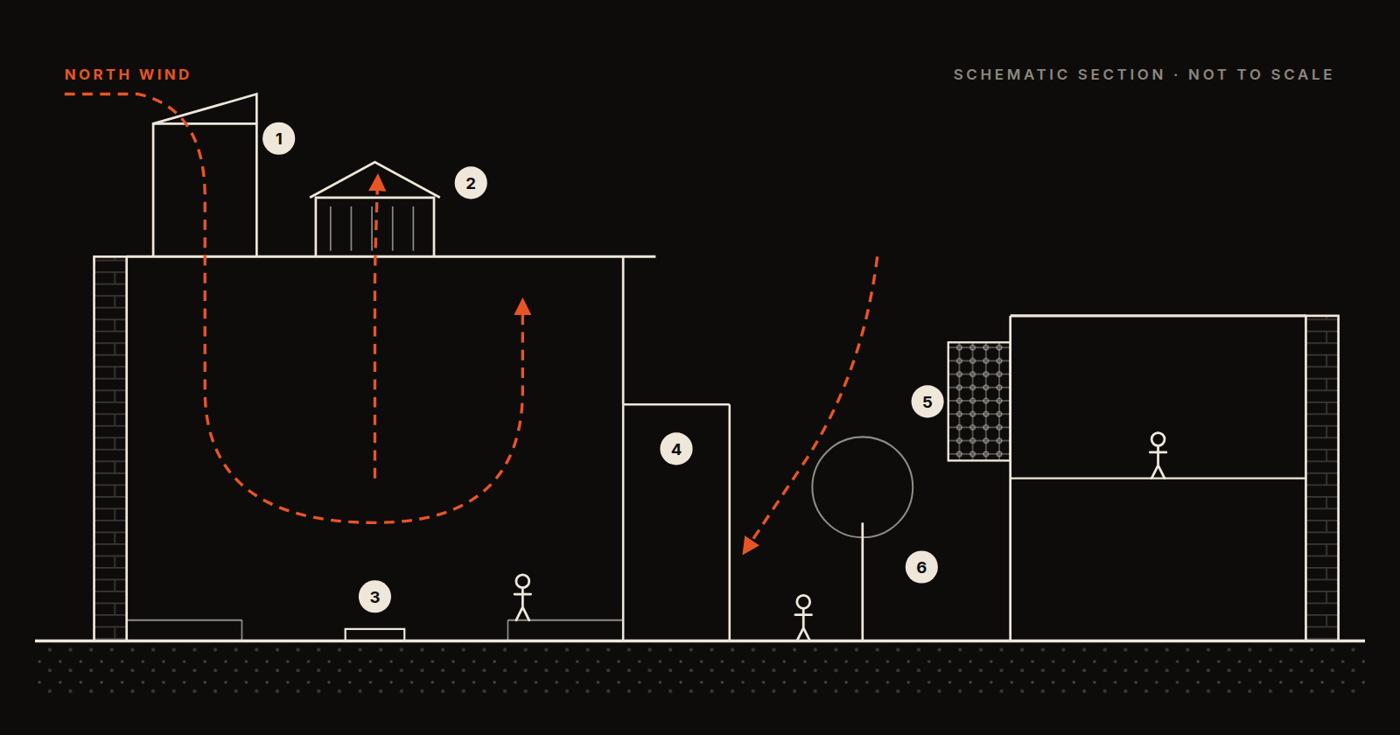
Schematic section of a Cairene courtyard house showing a wind-catcher, a roof lantern, a mashrabiya and the courtyard, with air movement in orange.
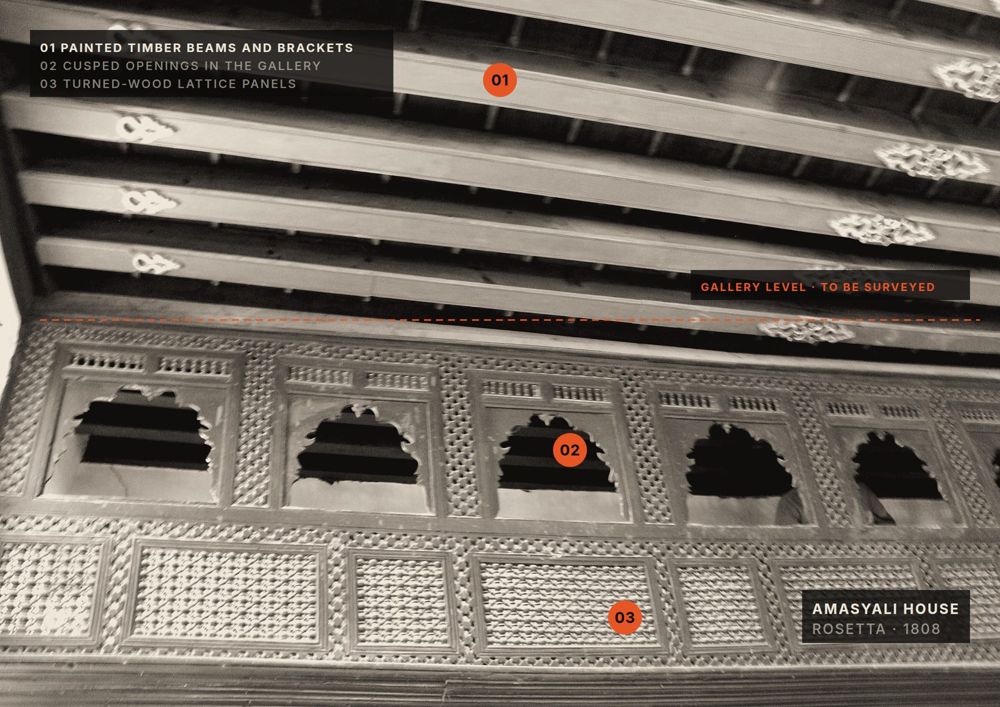
Painted timber ceiling and wooden lattice gallery of Amasyali House in Rosetta, with numbered survey markers.
Amasyali House, Rosetta. Photo: لا روسا, CC BY-SA 4.0, Wikimedia Commons. Toned; illustrative overlay by MASAR Competitions.
07

One board

You submit exactly one A0 landscape board, uploaded on this site. The layout is free. The only fixed element is the official information strip: 40 mm wide, on the right edge, for your registration code and project data. No names, universities or logos anywhere on the board.

The strip template and the full Brief are published here at launch.
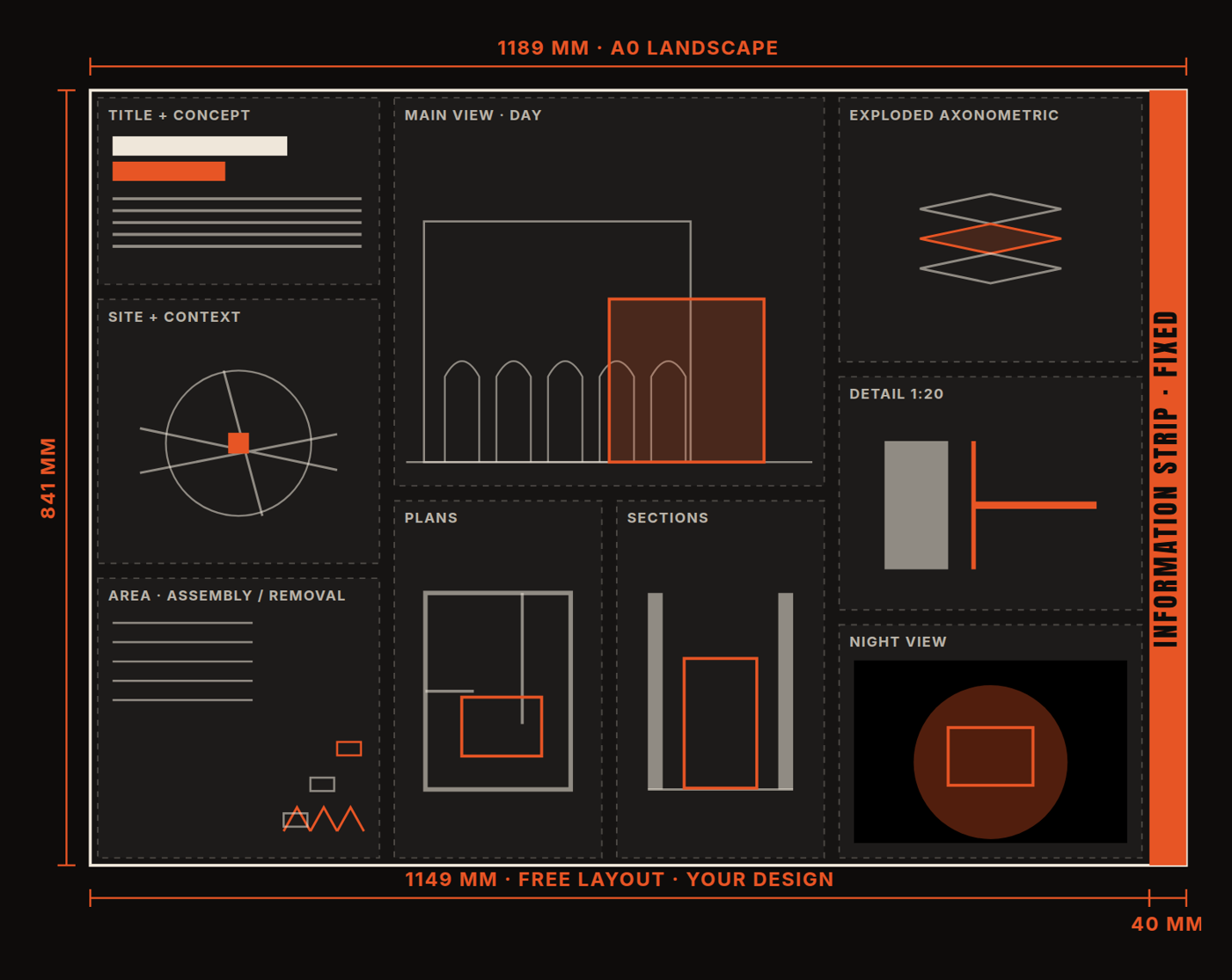
A0 board diagram: a free layout area of 1149 mm and a fixed 40 mm information strip on the right edge.
08

Who can enter

Architecture students and young architects of any nationality, aged 26 or younger on the submission day.
Individuals or teams of up to 3 members. Team members can come from different universities and disciplines.
Graduation projects are welcome.
09

You do not enter alone

General SessionsOnline talks on Zoom with architects and heritage specialists, open to every registered participant.
MentoringEach team can book two online reviews with a mentor during the university mid-year break. Mentoring is optional, and mentors do not sit on the jury.
CertificateParticipants who attend the mentoring receive an online certificate of completion.
Questionsask@masarcompetitions.com
10

Buildings that are waiting

Shown to open your eyes, not to assign a site. Including a building here implies no access, permit or endorsement. You choose your own building.

Mamluk and Ottoman
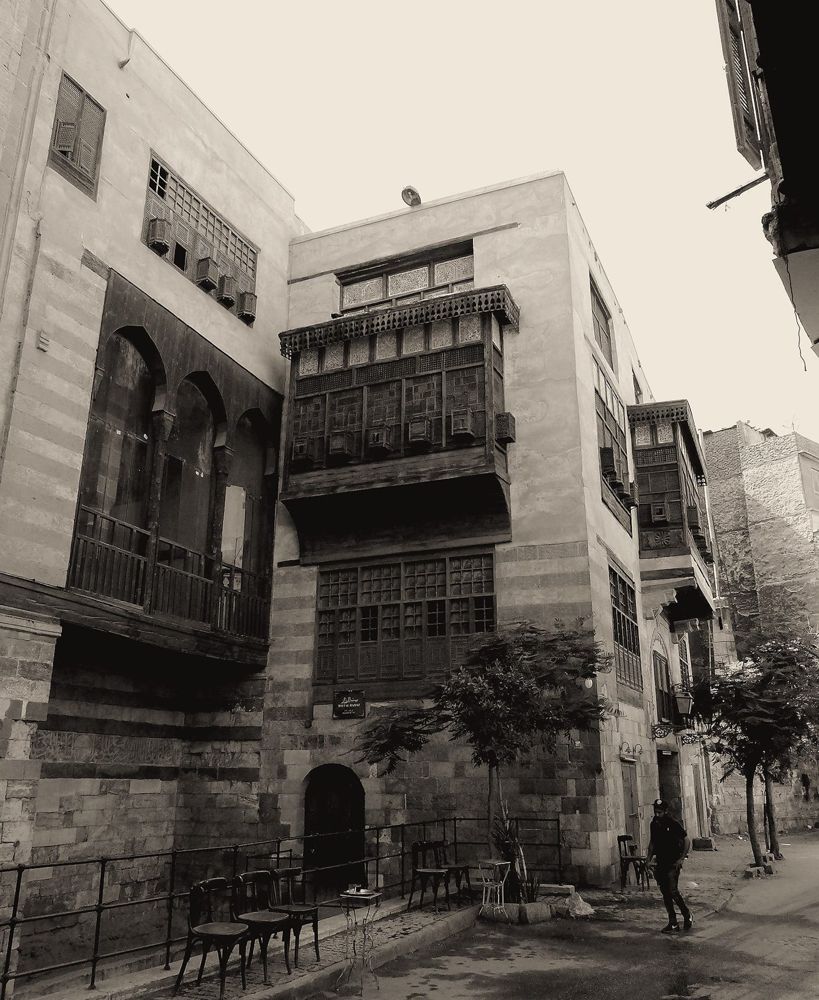
Bayt al-Razzaz, Darb al-Ahmar, Cairo
Bayt al-RazzazDarb al-Ahmar, Cairo · 15th and 18th centuries
Photo: Robert Prazeres, CC BY-SA 4.0, Wikimedia Commons
Amasyali House, Rosetta
Amasyali HouseRosetta · 1808
Photo: لا روسا, CC BY-SA 4.0, Wikimedia Commons
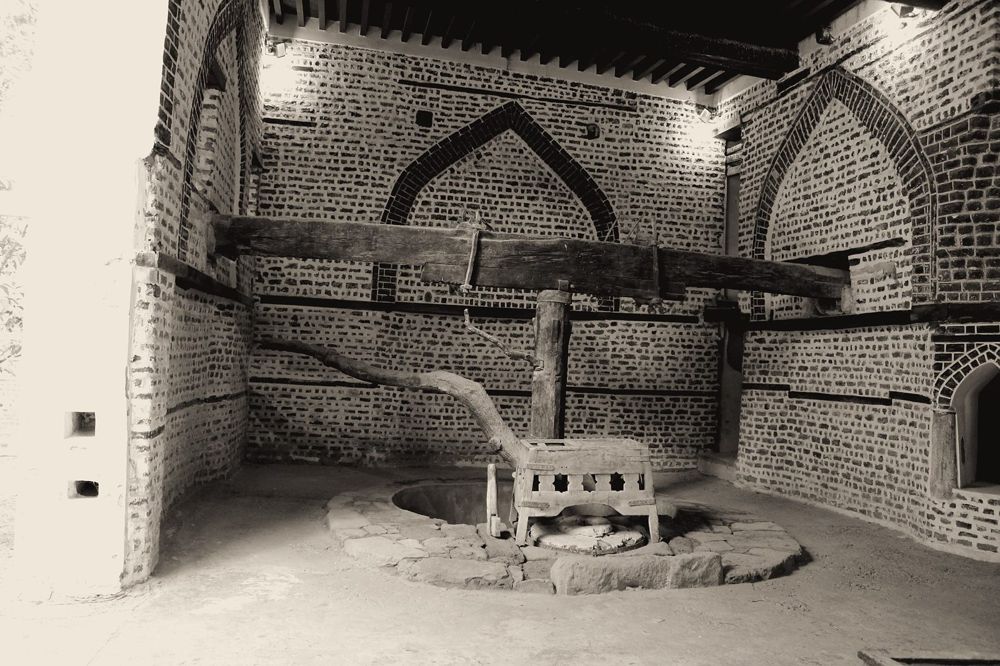
The Mill House, Rosetta
The Mill HouseRosetta · Ottoman period
Photo: لا روسا, CC BY-SA 4.0, Wikimedia Commons
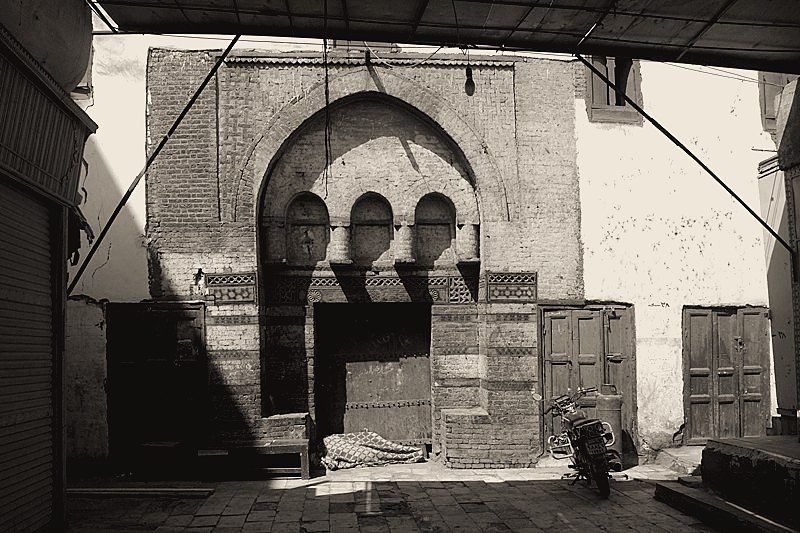
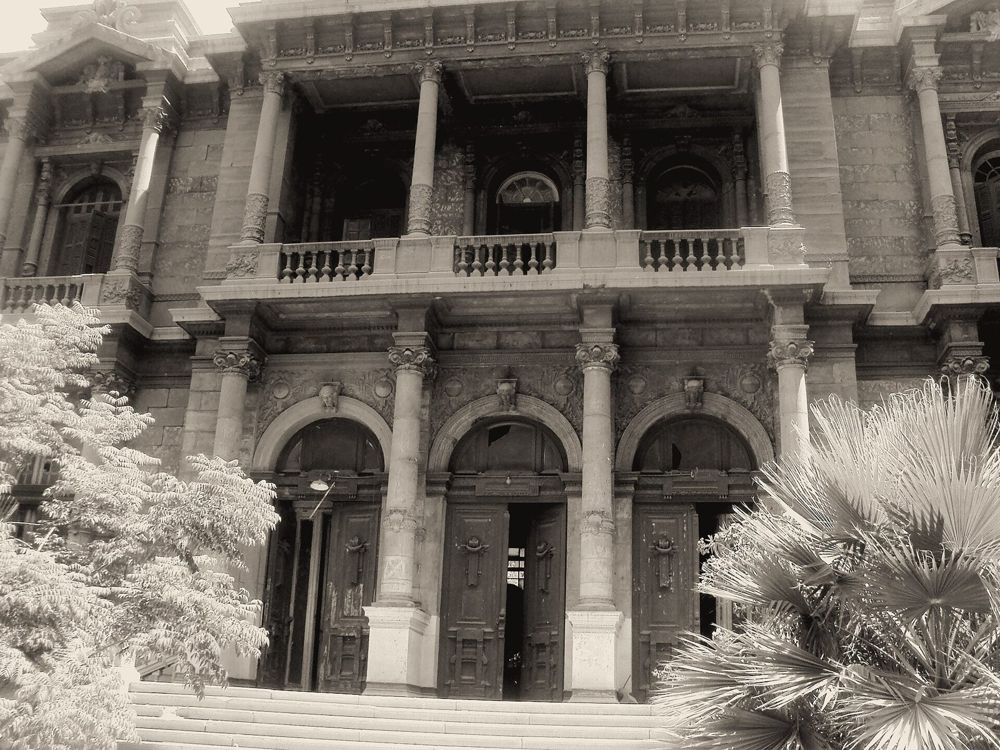
Wikalat al-Gedawi, Esna
Wikalat al-GedawiEsna · Ottoman period
Photo: Roland Unger, CC BY-SA 3.0, Wikimedia Commons
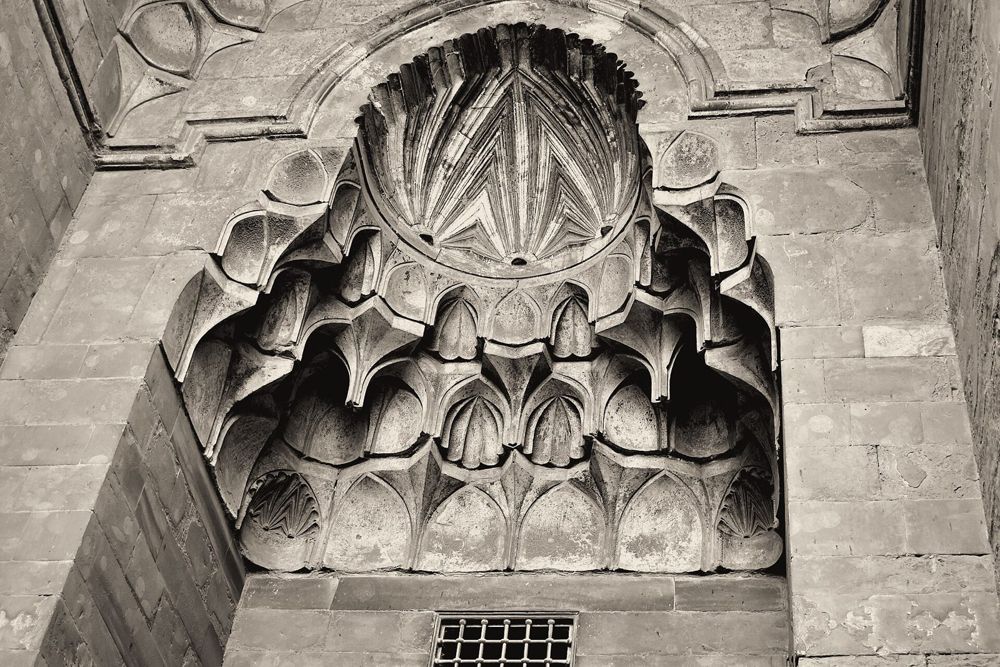
Palace of Amir Qawsun, Historic Cairo
Palace of Amir QawsunHistoric Cairo · 1330s
Photo: Hatem Moushir, CC BY-SA 4.0, Wikimedia Commons
Khedivial
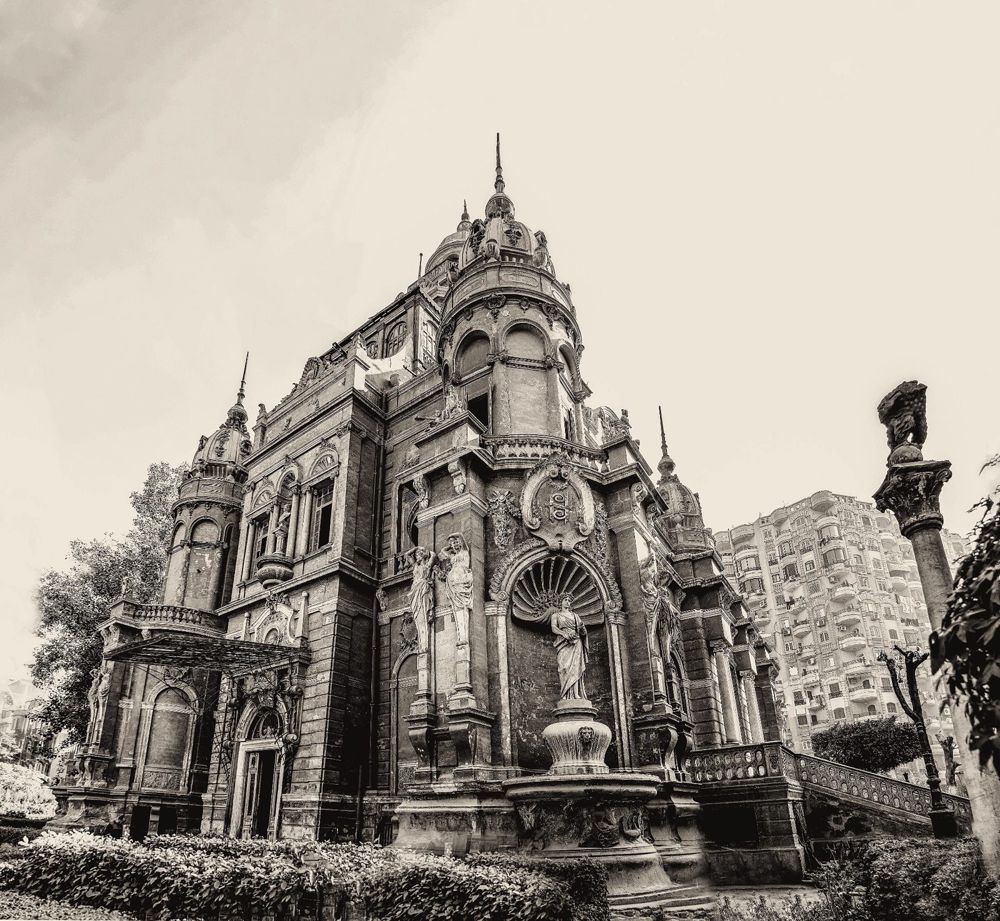
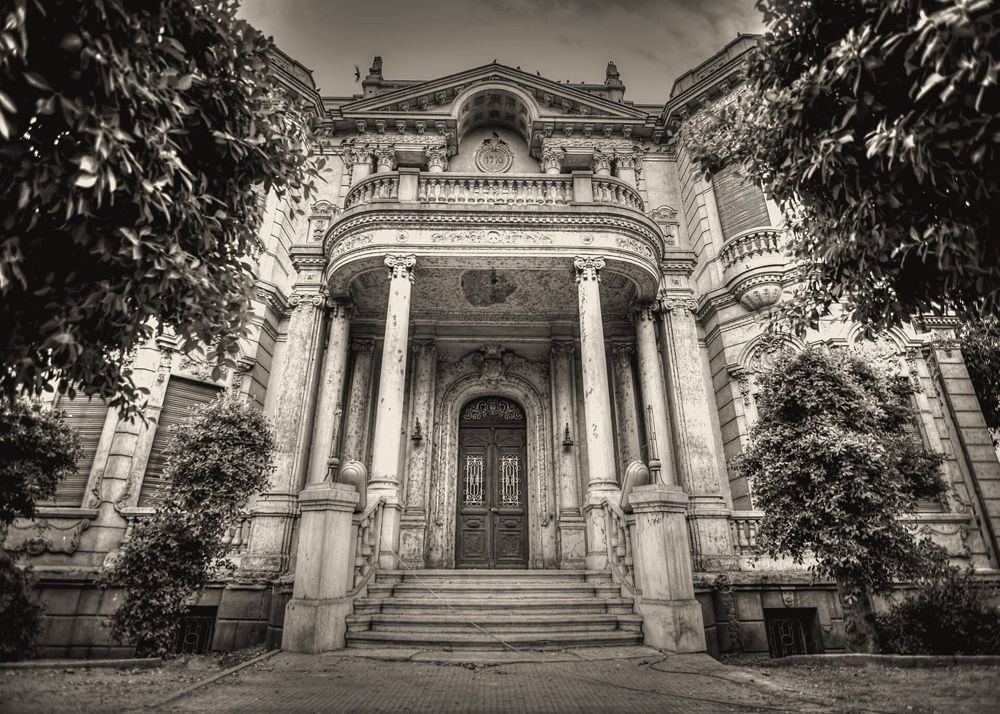
Sakakini Palace, Daher, Cairo
Sakakini PalaceDaher, Cairo · 1897
Photo: Samir mustafa89, CC BY-SA 4.0, Wikimedia Commons
Prince Said Halim Palace, Downtown Cairo
Prince Said Halim PalaceDowntown Cairo · 1890s
Photo: لا روسا, CC BY 3.0, Wikimedia Commons
Alexan Pasha Palace, Asyut
Alexan Pasha PalaceAsyut · early 20th century
Photo: Al3alamey, CC BY-SA 4.0, Wikimedia Commons
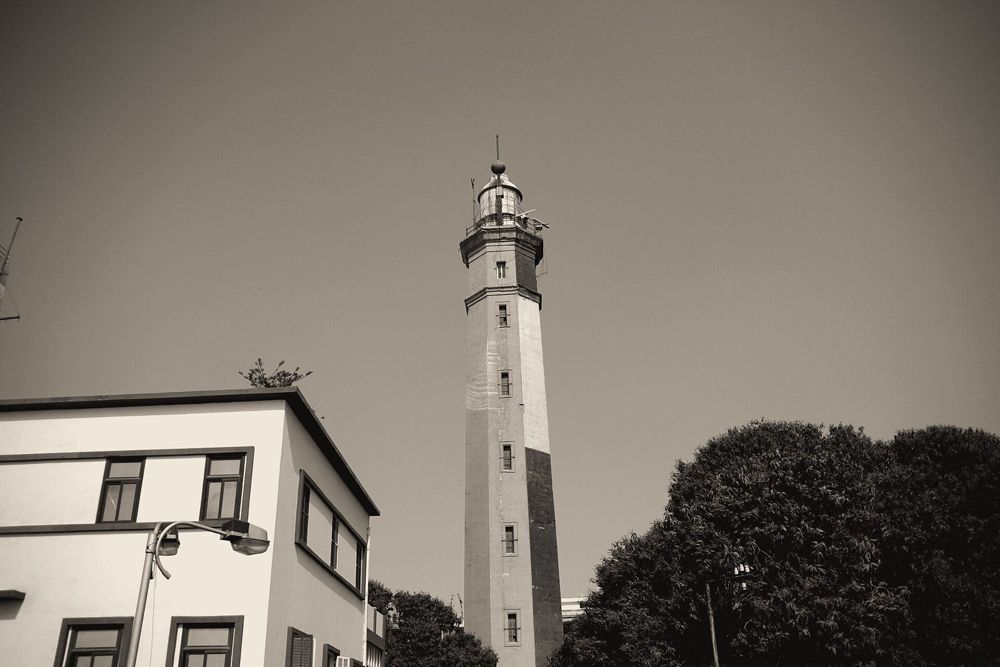
Old Port Said Lighthouse, Port Said
Old Port Said LighthousePort Said · 1869
Photo: Michael Tyler, CC BY-SA 2.0, Wikimedia Commons
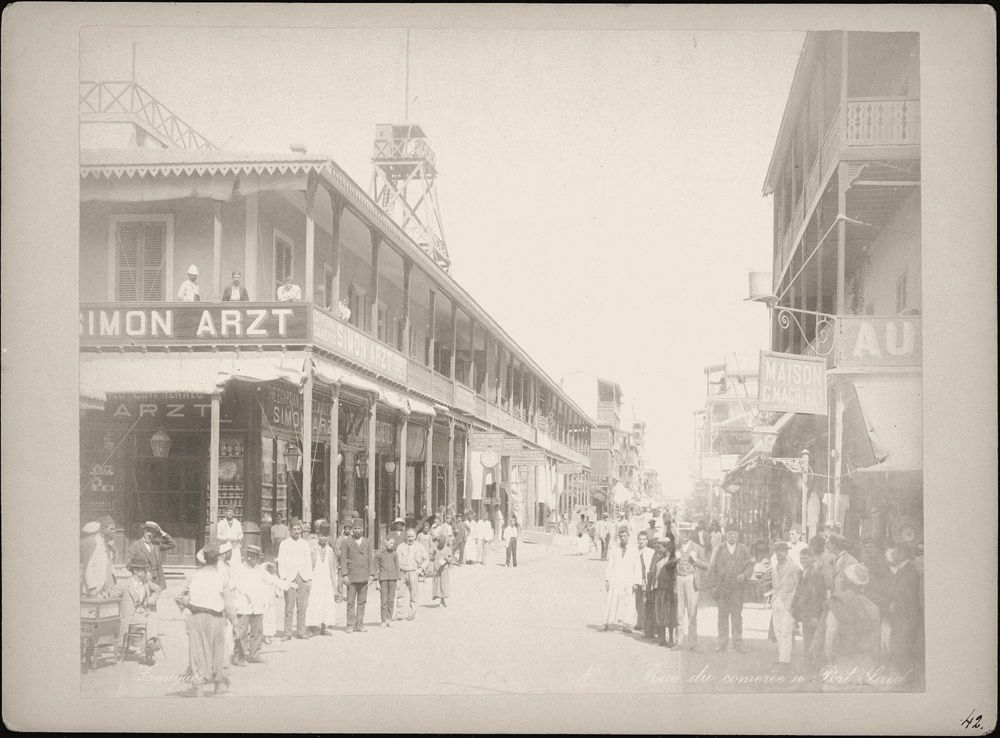
Simon Arzt store, Port Said
Simon Arzt storePort Said · archival photograph
Rijksmuseum, CC0
11

Buildings that lived again

What if a gallery lived inside a power station? What if music filled an old caravanserai? What if a forgotten palace became a place to learn again? It has happened before:

The LouvreParis · a royal palace → the world’s most visited museum
Tate ModernLondon · a power station → a museum of modern art
The ReichstagBerlin · a war-scarred parliament → a glass dome open to all
Arena di VeronaVerona · a Roman amphitheatre → an opera stage every summer
Baron Empain PalaceCairo · a 1911 palace → exhibitions and events
Wikalat al-GhuriCairo · a Mamluk caravanserai → Sufi music and crafts
12

Egyptian identity. Real impact.

One rule for every MASAR Competitions competition: an impact on the place — and on the people who live in it.

13

Three themes. Many competitions.

The theme stays; the competitions under it are renewed every year.

01Dialogue with the NileProjects along the Nile — its cultures, its civilisations, its stories.About the theme
02AfterlifeOld buildings, a second life: reuse, restoration and modern interventions in historic places.
03Re:ActReal problems, real proposals: every problem that can be solved deserves a competition.